
Understanding Pressure Sensors Transducers and Transmitters in Process Control
In the ever-evolving world of process control, the terms "sensor," "transducer," and "transmitter" are often used interchangeably, creating confusion among professionals and enthusiasts alike. While these devices share similarities, their unique roles in measuring and transmitting physical variables cannot be overlooked. This article explores the distinctions and applications of these technologies, particularly focusing on high precision solutions like the high pressure pressure transducer.
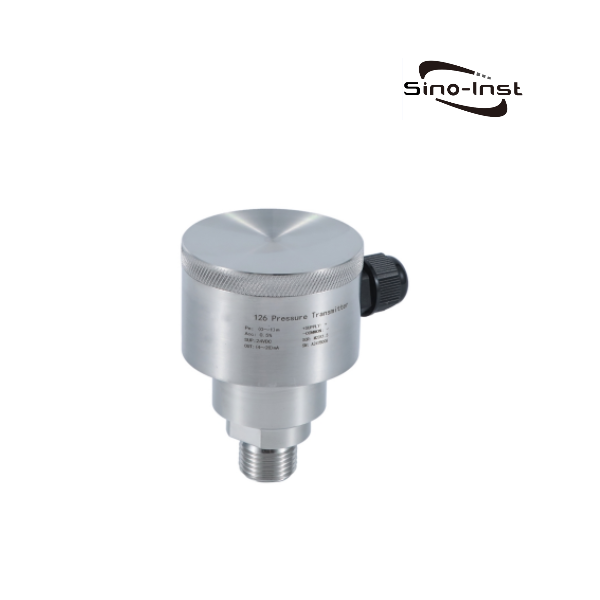
What Is a Sensor?
A sensor performs the initial measurement of a physical variable such as pressure, temperature, or force. It directly interacts with the variable being measured, detecting changes and providing a corresponding output signal. For instance, temperature sensors detect thermal changes and output a signal proportional to the temperature variations. This capability makes sensors the foundation of any measurement system, including high-precision applications.
Understanding Transducers
Transducers convert one form of energy into another. In the field of instrumentation, they typically transform a physical variable into an electrical or electronic signal. For example, a strain gauge is a transducer that converts mechanical strain into a change in resistance, which can be measured electronically. All sensors are transducers because they convert physical variables to measurable outputs, but not all transducers are sensors. A loudspeaker, for instance, is a transducer that converts electrical signals into sound waves but does not sense physical variables.
The Role of Transmitters
A transmitter takes the signal from a sensor or transducer and amplifies it to a standardized instrumentation signal, such as 1-5 volts or 4-20 milliamps. These signals are then sent to a receiver, such as a PLC (Programmable Logic Controller) or DCS (Distributed Control System). For example, a pressure transmitter can convert a millivolt signal from a pressure transducer into a 4-20 mA output, representing 0 to 100% of the pressure being measured.
Distinguishing Between Pressure Devices
Pressure Transducers
A pressure transducer measures physical pressure and converts it into an electrical signal. This signal can be directly read or further processed. Applications include hydraulic systems and industrial pressure monitoring.
Pressure Transmitters
Pressure transmitters amplify and standardize the signal from a transducer. They are widely used in process control to ensure compatibility with control systems. Their ability to reliably transmit data over long distances makes them indispensable.
Key Differences Between Pressure Switches and Transmitters
A pressure switch consists of a sensing transducer and an electrical switch that opens or closes at a specific pressure. Unlike a transmitter, which provides an analog signal, a pressure switch offers simple on/off functionality. While a pressure transmitter could theoretically function as a pressure switch, it is often impractical due to cost and complexity.
| Device | Output | Use Case |
|---|---|---|
| Pressure Transducer | Millivolt signal | Precise measurement |
| Pressure Transmitter | Standardized signal (e.g., 4-20 mA) | Process control systems |
| Pressure Switch | On/Off switch | Threshold monitoring |
Practical Applications of High-Pressure Devices
High-pressure measurement devices, such as the high pressure pressure transducer, are essential in industries like oil and gas, aerospace, and manufacturing. These devices ensure safety and efficiency by providing accurate readings under extreme conditions.
Why Choose Sino-Inst for Pressure Measurement Solutions?
Sino-Inst offers a wide range of high-precision pressure measurement devices, including transducers, transmitters, and switches. With a commitment to quality and innovation, Sino-Inst ensures that every product meets the stringent demands of modern industry. For more information, visit Sino-Inst.